Christian Courage Is More Than Suffering Bravely
The earliest Christian communities were widely and ruthlessly persecuted. Christians were maligned, castigated, deprived, tormented, and executed. Children were torn from their parents. Spouses were executed before each other’s eyes. Whole communities were slain en masse, sometimes for the entertainment of the coliseum. This era of intense persecution defined the shape of the church’s life and mission for more than a century.
To be Christian required courage. At least until Constantine’s fourth-century edict decriminalizing Christianity, churches accepted the prospect of arrest and execution. Churches met secretly in catacombs. No one was assured another day. It took courage to believe. There were no latent social advantages to being Christian, as there may still be in certain parts of the world today. Quite the opposite: Believing was perilous. To bear witness to the gospel of Jesus Christ was to risk everything.
The apex of Christian courage is martyrdom. All persons die, but some die for the sake of something ultimate that transcends them. Many Christians have been put to death for their allegiance to Jesus Christ. I say “allegiance” because it captures best the depth of commitment displayed in martyrdom, for the martyr refuses to renounce their identification with Christ and instead accepts a tormenting death. The greatest threat to life is death, and yet here, the greatest testimony to life—eternal life—is achieved through death. Through martyrdom, the greatest depth of Christian commitment is displayed.
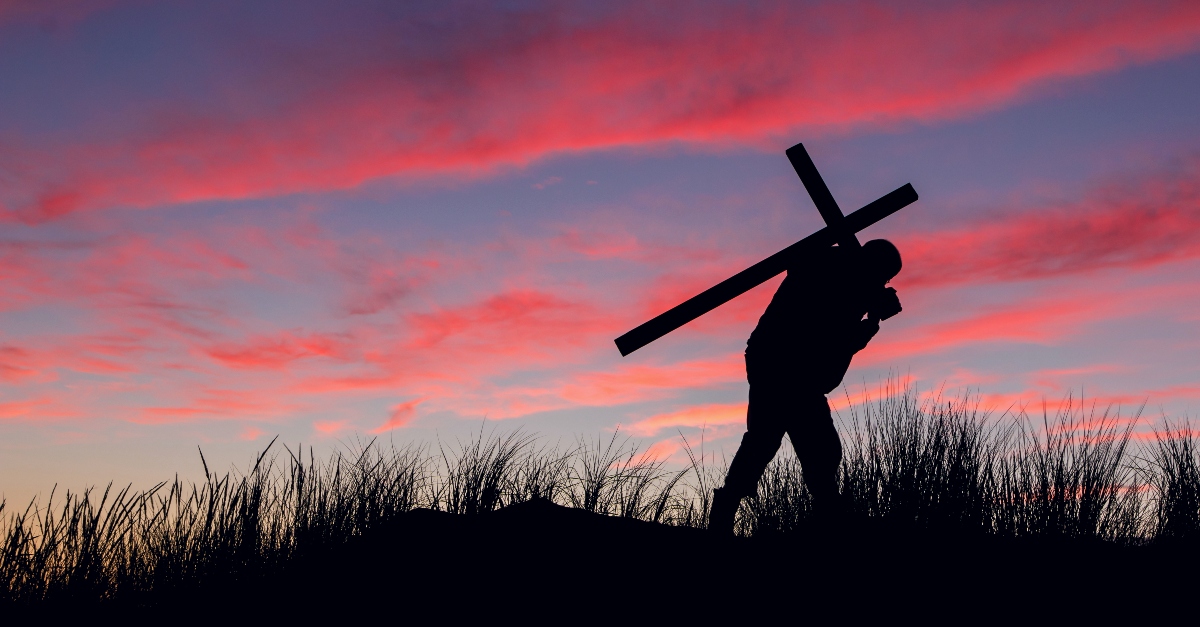
Courage requires reckoning with death. As Josef Pieper explains, “Fortitude that does not reach down into the depths of the willingness to die is spoiled at its root and devoid of effective power.” A courage that stops short of a willingness to die is no real courage at all. This willingness is announced and repeated by Christ himself, who commands disciples to take up the cross to follow him. Suffering, scorn, rejection, and death—these his disciples may expect to receive from the world for their faithfulness.
For these reasons, courage forbids suffering for its own sake. Masochisms of various kinds ought not to be mistaken for courage, no matter how elaborate or amplified. Suffering that serves no further purpose is called “gratuitous.” By contrast, suffering is for something other than itself, something that surpasses it, and courage uniquely directs action in the accomplishment of some good in the face of suffering. To accomplish some good first requires wisdom and justice, such that only the wise and just can really be brave.


Christianity sometimes describes threatening hardships as tribulations, and in doing so reframes the logic of suffering and the human response it elicits. Suffering is ubiquitous and recurring. Its flames burn everywhere in this world so rich in accelerants. If suffering is purposeless, then the pain of its burns will be interpreted either as a matter of indifference or misfortune. Existence reduces to a cosmic prank. Perhaps one can develop a personal attitude of defiance toward suffering and implement strategies for avoiding it, but that is as far as any purpose can extend—a Sisyphean ardor to survive for its own sake.
Courage supposes that there is more to suffering than the forbearing of it. The brave do not suffer for the sake of suffering. Masochism is antithetical to courage. Instead, the brave understand how suffering refines and forms the soul, preparing it for action in the face of sufferings yet to come. Suffering is purgative, and those who endure it in pursuit of some good are rightly said to be brave. Endurance of pointless suffering is, by contrast, the purest folly.
Courage points to the transcendent. It isn’t enough to be courageous for its own sake. Any display of genuine courage points beyond itself to some superior good. Pieper thus describes the truly brave person as one who “cannot be forced, through fear of transitory and lesser evils, to give up the greater and actual good, and thereby bring upon himself that which is ultimately and absolutely dreadful.” Courage consists in resoluteness toward the good and is thus a commitment requiring confrontation with something “dreadful.” The courageous person suffers yet endures.
Endurance, or perseverance, is a principal feature of courage. Thinking of courage narrowly as the heroic act, the boldest step toward danger, misses the more common “passive” sense of courage; “passive” in the sense of it happening to us or coming upon us. Clinging to the good requires endurance. The terminally ill patient, for example, suffers from the disease racking their body but, rather than take their own life prematurely, courageously forbears until their natural passing. This capacity for endurance is closely associated with patience, for “through patience man possesses his soul.” This patient endurance is the essence of courage.
As the essence of courage, endurance is antithetical to wrathful aggression. The Christian conception of courage underscores the duty to endure, through which the moral substance and strength of the soul is manifest. It also happens that worldly power so much structures the world that endurance, as Pieper puts it, “is the ultimate decisive test of actual fortitude, which essentially is nothing else than to love and realize the good, in the face of injury and death, and undeterred by any spirit of compromise.” That strength comes through weakness is among the deepest truths of Christian faith. The meaning of weakness is turned inside out.


Strength through weakness is revealed first and foremost in Jesus Christ. Jesus tells his followers that they will suffer for his sake. It is an inevitability. To be human is to struggle against corrupting powers set against humanity—envy, malice, hatred—and Christians in particular are subject to still greater sufferings because of their identification with Christ. He can ask his disciples to endure suffering as one who is himself subjected to abuse, betrayal, torture, and execution. From the beginning of his ministry, he is ready to die. He endures even the cross and forsakenness.
Thus Christian discipleship supposes courage: courage to obey, to witness, to persevere, and ultimately to be crucified with Christ. This is courage to believe and to keep on believing; Christian courage is persevering. Those of us who take up the cross to follow Jesus are sustained by the Holy Spirit and supplied all the grace needed to stay the course set before us. Perseverance is a fruit of the Spirit.
How does one go about becoming courageous? First, by naming and confronting that which we fear. Death, loneliness, silence, discomfort, embarrassment, ideas—anything that provokes us instinctively to recoil. We will likely find that task—the naming of our fears—itself frightening. But it is impossible to become courageous without confronting our fear. Courage is what propels someone through or beyond fear in pursuit of some noble end. We may, and often do, cave to our fears, but that needn’t always be so.
If you want to cultivate courage, try this: Identify two or three of your more obvious fears and write them down. Now, think for a moment about some achievable practice you could implement to counter those fears. It doesn’t have to be extreme. For example, if you’re terrified of public speaking, could you join a book group and set a goal to speak up a couple of times? If you’re afraid of being alone, go for a short solitary walk. If you’re afraid of ideas that differ from your own, try reading a reasonable book exploring those ideas. These are but examples to show that practices for redressing fears exist.
In this context, it is important to differentiate between anxiety and fear. Many people attest to feeling anxious, some to the point of diagnosable disorder. And, in fact, there is much in the world to be anxious about. I want to convey two simple truths about anxiety: First, anxiety plays an important role in basic human motivation; and second, anxiety is not identical to fear. Think of the anxious nerves one gets before a game or performance: They serve as a sort of anticipatory precursor that, in the course of events, gradually recedes. Or think of worries over a looming work deadline, which serve as modest impetus to complete unfinished tasks.
Anxiety shares some experiential similarities to fear but is distinct from it, just as it is distinct from feelings like fright, terror, or dread. The narrowing of emotional vocabulary has had the effect of collapsing a range of emotions into one—anxiety—and the consequences of that development have been largely negative. It treats anxiety first as a disease needing therapeutic remedy while ignoring how anxiety assists in catalyzing action.
While there is a difference between fears and anxieties, courage enables us to overcome both. Courage rightly orders affections toward the objects of our fear. It cannot fully resolve them, of course, but grants a way of naming fears and living our whole lives in light of them.
Matthew Arbo is an ethicist and policy adviser in Washington, D.C. Content taken from The Pursuit of Character by Matthew Arbo, ©2026. Used by permission of Baker Books.
The post Christian Courage Is More Than Suffering Bravely appeared first on Christianity Today.
Original Source: Christianity Today
←Back to all devotionals